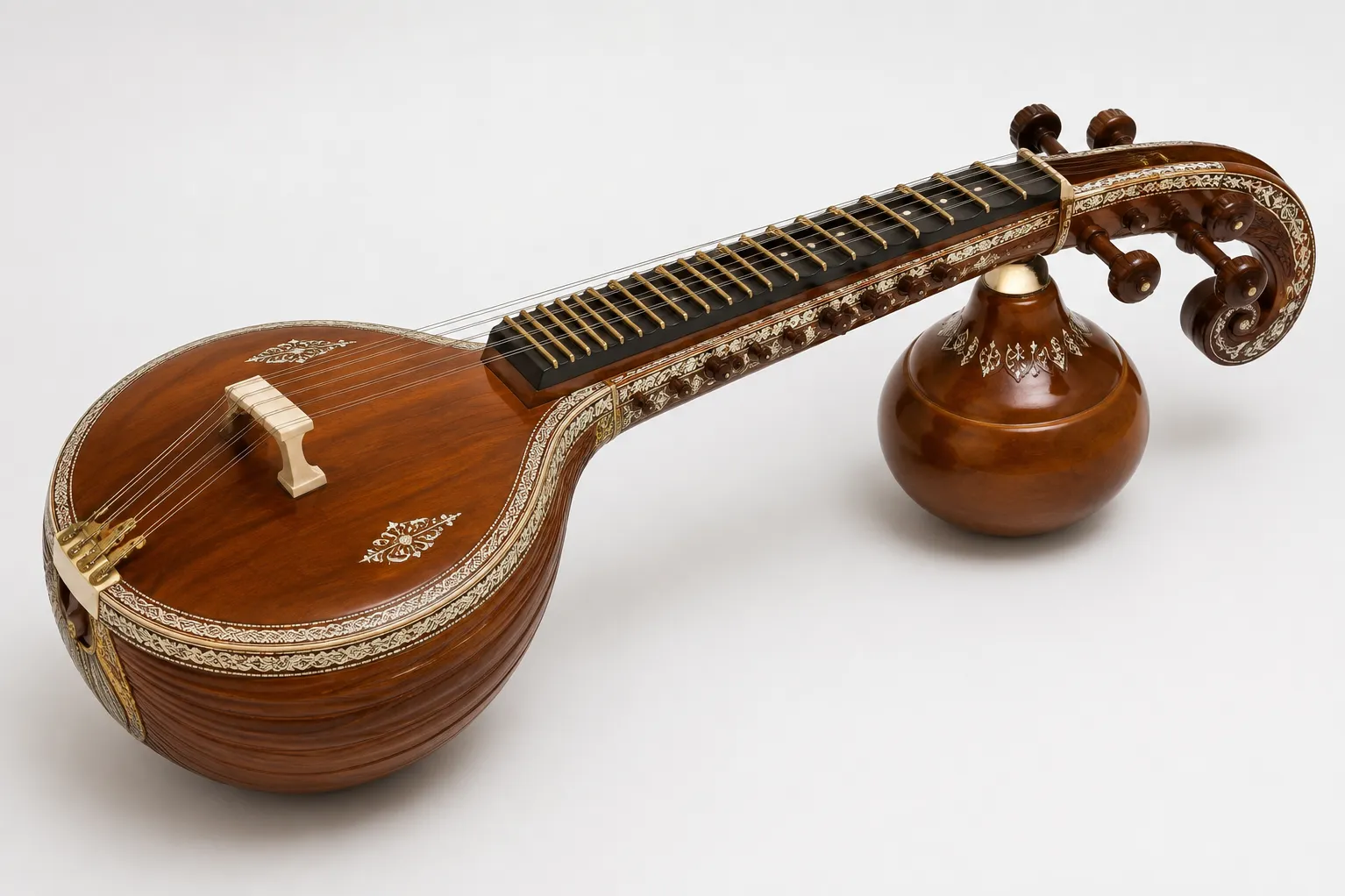
Students searching for Veena training often focus first on finding a teacher nearby. Location certainly matters, but effective learning also depends on teaching structure, individual correction, practice guidance, and the student's ability to attend consistently.
For learners in Banashankari and surrounding Bengaluru neighbourhoods, evaluating these factors together can make choosing classes easier.
Start by Identifying Your Learning Level
A complete beginner has different needs from someone returning after several years.
Beginners require instruction in posture, swaras, plucking, fingering, tala, and basic exercises. Returning students may need an assessment to determine which skills remain strong and which need rebuilding.
Students with previous Carnatic vocal knowledge may understand swaras and ragas but still need substantial technical guidance on the instrument.
Check Whether Technique Is Corrected Early
Veena playing involves coordination between both hands.
Beginners may accidentally use excessive pressure, incorrect finger movement, or an uncomfortable posture. These habits can make advanced playing more difficult.
Classes should therefore provide detailed technical correction rather than concentrating only on completing compositions.
Think About Travel Before Committing
A class that looks convenient on a map may become difficult to attend during peak Bengaluru traffic.
Students living around Banashankari 2nd Stage, Banashankari 3rd Stage, Padmanabhanagar, Chennammanakere Achukattu, Kathriguppe, Girinagar, Srinagar and Vidyapeeta Circle should consider realistic travel time when selecting regular lessons.
Consistency is important because long interruptions can affect fingering familiarity and musical continuity.
Evaluate the Overall Music Environment
Learning an instrument becomes richer when students are exposed to the musical tradition behind it.
Sri Veena Vani Music School provides instruction across classical music and instrumental disciplines, giving learners an environment where different aspects of music can be explored.
A student studying veena can benefit from understanding Carnatic compositions, tala, raga structure, and listening practices rather than viewing instrumental technique in isolation.
Know What Progress Should Look Like
Progress should not be measured simply by the number of compositions completed.
Useful indicators include:
- Cleaner note production
- Better coordination between both hands
- Improved tala stability
- More accurate swaras
- Smoother movement between notes
- Ability to remember and reproduce lessons independently
Students should gradually require less assistance with previously learned material.
Choose for the Long Term
Classical instrumental learning takes patience. A suitable programme should therefore be one the learner can realistically continue.
Consider teacher guidance, lesson structure, accessibility, practice expectations, and the pace of progression together.
For students around Banashankari and South Bengaluru, choosing veena instruction that combines convenient access with systematic classical training can support more consistent and meaningful musical development.
Keywords